Professional Area
 Distributors
 en
en


The importance of choosing the perfect juicer for your bar, restaurant or hotel
An orange juicer is not just another machine in the kitchen; it is a key tool in your business operations if you want to offer fresh and natural juices quickly and efficiently. Choosing the right equipment will allow you to:
- Increase productivity: a good juicer reduces preparation times, optimizing service.
- Ensure juice quality: professional models preserve the properties of the juice without contaminating it with bitter oils from the peel.
- Minimize waste: an efficient system makes the most of the fruit, increasing profitability.
- Improve the customer experience: freshly squeezed juice is always more appealing than packaged juice.
Key features of the best juicers for hospitality
When evaluating professional juicers for hospitality, it is essential to consider the following features:
Power and performance
Motor power is a fundamental factor, especially if your business serves a large number of juices daily. To choose correctly, consider:
- Low-demand businesses (fewer than 50 juices/day): a juicer between 100W and 200W may be sufficient.
- Medium-demand businesses (between 50 and 150 juices/day): you need a more powerful motor, between 200W and 300W.
- High-demand businesses (more than 150 juices/day): look for equipment over 300W, with an automatic feeding system and high juicing capacity.
Avoid juicers with low-power motors if you expect continuous use, as they may overheat and reduce their lifespan.
Durability and resistance
A professional juicer must be made of materials resistant to intensive use and frequent cleaning. The best materials include:
- Stainless steel: corrosion-resistant, hygienic and easy to clean.
- High-resistance ABS plastic: less expensive, but less durable in the long term.
- Screwless removable components: facilitate cleaning and maintenance.
Ease of cleaning and maintenance
Choose models that are easy to disassemble and clean, as this saves time and ensures hygiene in beverage preparation. A design that allows easy access to internal parts is ideal for efficient maintenance.
Consider models that feature:
- Removable, dishwasher-safe parts.
- Self-cleaning systems between juicing cycles.
- Easy-to-empty pulp containers.
Professional design and style
An attractive and functional design not only complements the aesthetics of the establishment, but also improves the user and customer experience.
- Compact or industrial design: depending on the available space on the bar or in the kitchen.
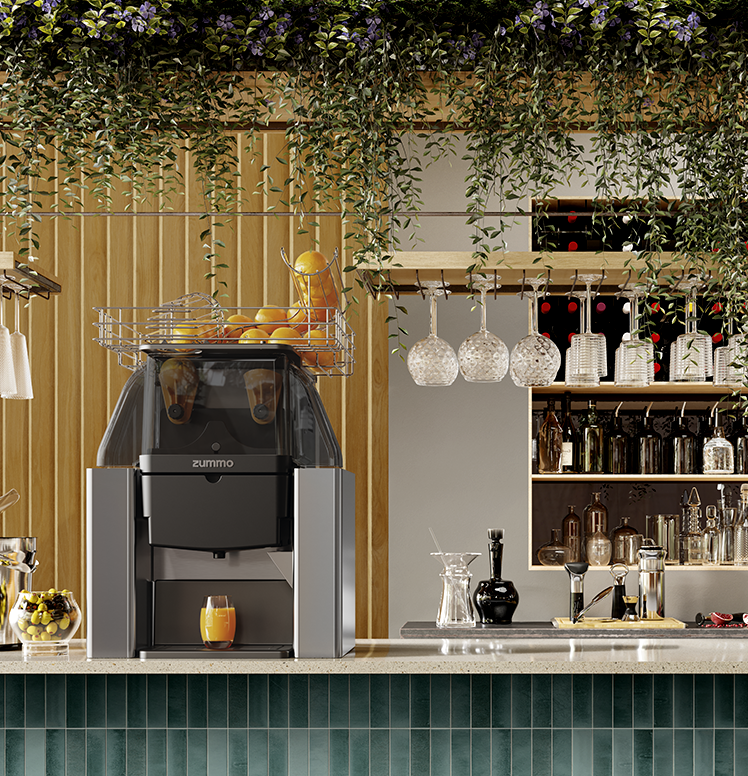
- Options with direct-to-glass dispensing: ideal for customer interaction in bars and cafés.
- Closed models with storage container: perfect for hotels and buffets, where large quantities of juice need to be served.
Tips for choosing the ideal juicer for your bar
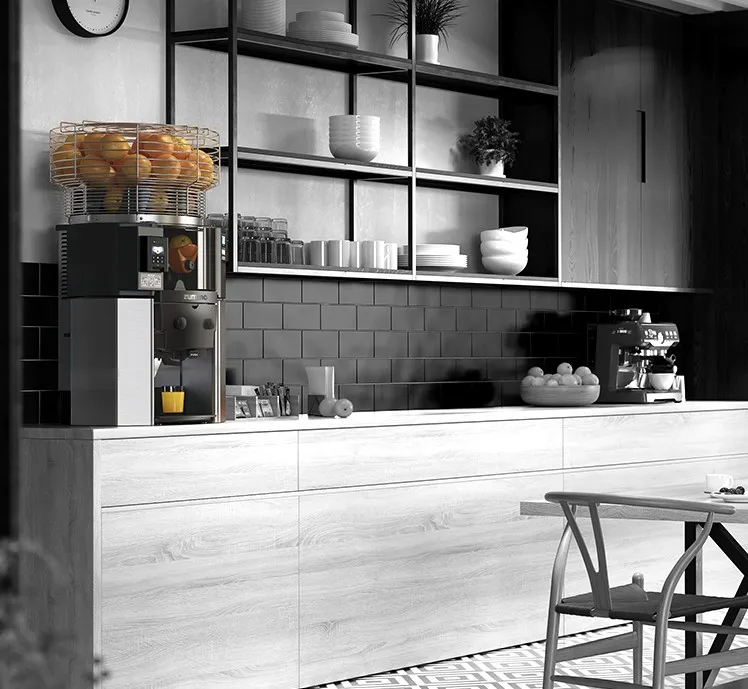
When selecting the perfect juicer, consider the following aspects:
Appropriate size and capacity
Assess the available space on your bar or kitchen and choose a juicer that fits without obstructing workflow. Also consider the production capacity of the equipment to meet your customer demand.
Keep these points in mind when choosing your juicer:
- Number of juices you plan to serve per day.
- Available space on the bar or in the kitchen.
- Whether you need a manual or automatic feeding juicer.
Practical example: If you have a café with high traffic in the mornings, a model with automatic feeding will prevent your team from wasting time squeezing each orange manually.
Adaptability to business demand
If your establishment offers a wide variety of beverages, it is advisable to opt for versatile juicers that can handle different types of citrus and production volumes.
Ask yourself:
- Do you need a juicer only for oranges or also for other citrus fruits?
- Will you use it during peak hours or occasionally?
- Do you prefer a manual, semi-automatic or fully automatic model?
Tip: If fresh juices are a core part of your menu, choose models that can operate continuously without overheating.
Considerations about space on the bar or kitchen
A compact design is essential to optimize space, especially in small areas. Vertical models are usually more suitable for limited spaces, while horizontal ones offer greater stability on large surfaces.
- Compact juicers for bars and cafés with limited space.
- Larger models with containers if high volumes need to be processed.
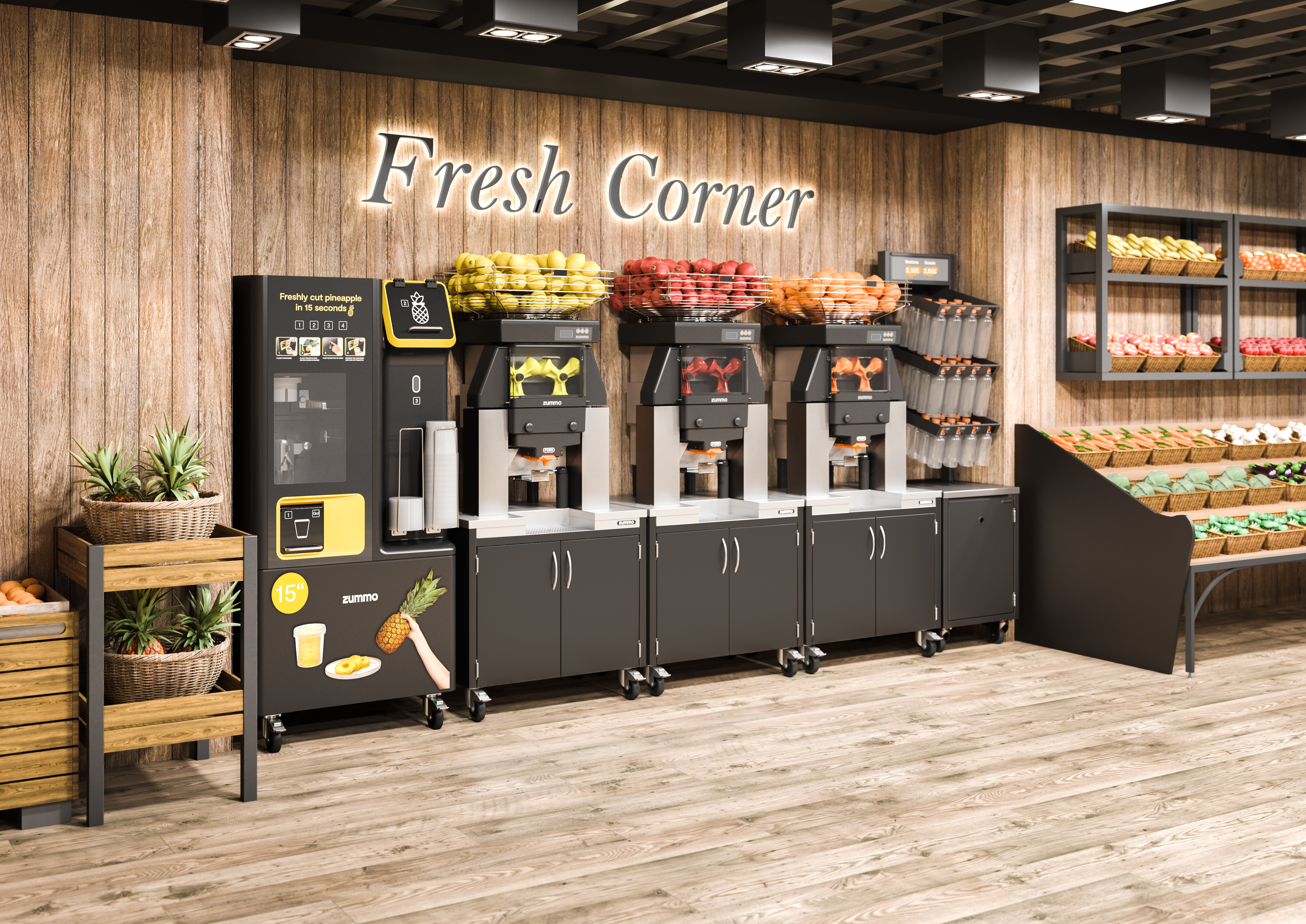
- Options with wheels for greater mobility in buffets and events.
Remember that a well-placed juicer can improve team productivity by up to 20%.
Maintenance and care tips for professional juicers
- Daily cleaning: disassemble and clean all parts after each working day to avoid build-up and ensure hygiene.
- Regular checks: regularly inspect the condition of moving parts and replace those that show wear.
- Proper use: follow the manufacturer’s recommendations regarding usage times and pauses to prevent motor overheating.
Choosing the ideal professional orange juicer will depend on your business demand, available space and the level of maintenance you require.
- If you have a bar or café with high demand, choose an automatic model with direct-to-glass dispensing.
- If you operate a hotel or buffet, opt for a high-capacity model with a storage container.
Investing in the right juicer will not only improve service efficiency, but will also positively impact customer experience and the profitability of your business.